@tendon.cental · Hong Kong style · Manila
Collagen only surrenders to long, gentle heat — so every batch braises for hours until it turns silk-soft and glossy. Almost pure protein, almost no fat, and a texture no shortcut can fake. Delivered same-day.
Properly braised tendon is translucent at the edges and wobbles like set custard — that's collagen turned to gelatin.
Today's batch
Slow-braised in our kitchen, frozen ready-to-eat — just heat and serve. Stock counts are live, batch-cooked and sold until gone. Same-day delivery or free pickup.
Field guide · The cut
Tendon is the dense connective tissue that anchors muscle to bone — a rope of nearly pure collagen. Raw, it's tough as leather. Cooked properly, it becomes one of the most prized textures in Cantonese, Japanese, Vietnamese, and Filipino cooking.
A cut with a passport. Braised tendon over rice in Hong Kong cafés, gyū-suji stew in Japan, the silky prize in a bowl of phở, and the depth in a proper pares — tendon has been feeding working cities for generations. It was never a byproduct; it was the point.
Why texture is everything. Tendon's collagen is wound into tight triple-helix fibers. Undercooked, they stay rubbery. Given hours of low, moist heat, they unwind and absorb the braise — turning glossy, wobbly, and tender enough to cut with chopsticks.
Lean by nature. Per 100g, beef tendon carries roughly 37g of protein with under 1g of fat — about 150 calories. It's one of the leanest ways beef gets eaten anywhere.
Field guide · Collagen
Collagen is the most abundant protein in your body — the scaffolding of skin, joints, and connective tissue. Tendon is one of the most collagen-dense foods there is. Here's what that does and doesn't mean.
The amino acid signature. Collagen is unusually rich in glycine and proline — amino acids that are the raw material your body uses when it builds its own connective tissue. Gelatin (cooked collagen) carries the same signature, which is why slow-braised tendon and long-simmered bone broth sit in the same family.
The honest caveat. Collagen is not a complete protein — it's low in some essential amino acids. Eating tendon doesn't paste collagen onto your joints; your body breaks it down like any protein. What you get: a very lean, high-protein food naturally rich in glycine and proline, best eaten as part of a varied diet.
Why people pair it with vitamin C. Your body's own collagen synthesis uses vitamin C as a cofactor — a squeeze of calamansi over a tendon bowl is tradition and biochemistry agreeing with each other.
How we make it · Slow-cooking science
Collagen begins converting to gelatin at low simmering temperatures — but conversion is slow, and rushing with a hard boil just seizes the meat. The schedule below is why premium tendon costs what it costs.
Tendons are trimmed and blanched to pull impurities, so the braise stays clean and clear.
Aromatics, soy, spices — the liquor the tendon will drink for the rest of the day.
Held at a bare simmer while the triple helix slowly unwinds into gelatin. Poke-tender, never mushy.
Resting in the braise deepens flavor; a final glaze gives the gloss. Then it's packed and out the door.
Field guide · Training tables
From boxers to lifters, collagen-rich cuts have a quiet following in training kitchens. The reasons are practical, not magical.
Recovery meals lean on protein.
Why tendon fitsA bowl delivers serious protein with very little fat — easy on digestion after training, heavy on the amino acids that repair demands.
Joint-heavy sports look at collagen.
Why tendon fitsResearch on collagen and joint comfort is ongoing and modest — but collagen-rich whole foods supply glycine and proline as part of a normal diet, with no pills involved.
Bone broth became a locker-room staple.
Why tendon fitsBroth is gelatin in liquid form. Tendon is the concentrated version — same slow-extracted collagen, but it's dinner, not a sip.
Traditional cuisines got there first.
Why tendon fitsCultures that cook nose-to-tail have eaten collagen-rich cuts before and after hard labor for centuries. Sports science is catching up to grandmother's stockpot.
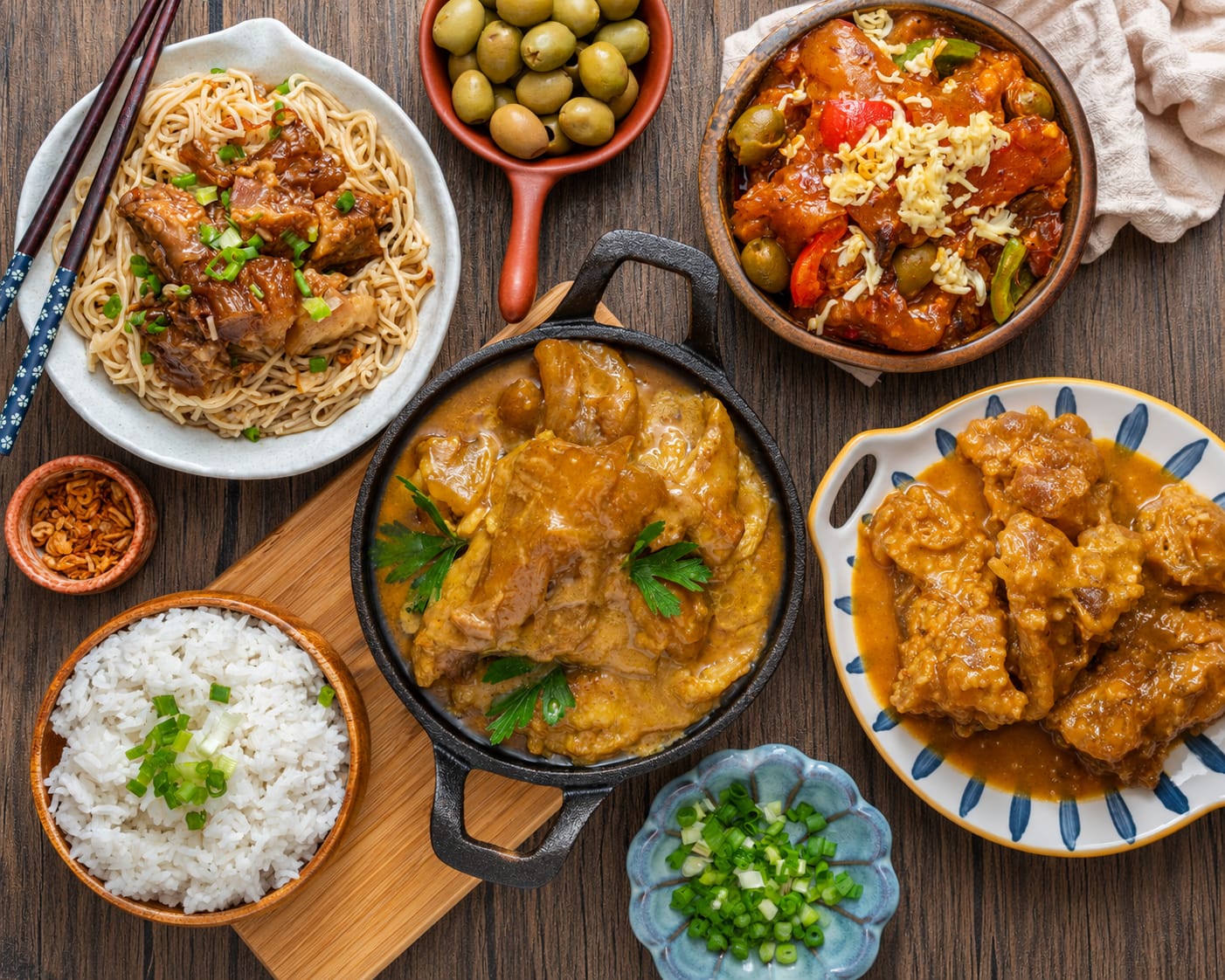
Serving suggestions
Everything we sell is slow-braised in our kitchen, then frozen ready-to-eat — no cooking on your end, just heat, assemble, and serve.
How to heat · Quick & easy
Straight from frozen? Boil approx. 20 minutes instead.
How to heat · Old school
From frozen: reheat immediately works, but add more water to avoid burning.
Careful when opening — the contents will be oozing hot.
The cha chaan teng standard — HK Style tendon over hot rice, sauce spooned over.
Rice bowlServes 1
Our tendon, our noodles, your broth — the gelatin turns any bowl into body.
NoodlesServes 1
Silky litid in peanut sauce with rice, blanched vegetables, and bagoong on the side.
FilipinoServes 1
Sweet HK curry over rice — the Solo Pack does all the work.
Rice bowlServes 1
Tendon as the main, our dimsum all around — a weekend spread with zero cooking.
SharingFeeds 3–4
Rich kaldereta tendon with warm pandesal for sopping up the sauce.
FilipinoServes 1–2 · also works over rice
Before you ask
Also from our kitchen
Small-batch pot-set yogurt, cultured slowly and delivered same-day. Same kitchen honesty, opposite end of dinner.